Personalized rehabilitation programmes designed to help patients regain strength, reduce fatigue, improve mobility and recover safely throughout the cancer journey.
It is not only the cancer itself but also the effects of treatments for cancer that can be very harsh on the body. The weakening of the body from surgery, chemotherapy, radiotherapy and simply being required to stay more at rest can cause one to feel weak, stiff, tired and less able to move around. Sometimes, these signs may not make themselves known right away but come slowly over time.
Oncology physiotherapy is centered on tackling just these issues. It is not just a generic exercise program but an individualized rehabilitation program tailored to each patient's diagnosis, stage of treatment and recovery objectives. There are no two patients who come to this point in the same way and consequently, no two programs are exactly the same.
At Medicover Cancer Institute, HITEC City, Hyderabad, this is monitored as a part of the comprehensive care plan led by Dr Sneha as physical recovery and medical treatment go hand in hand, they are not treated separately. A patient's physical state can directly affect how well they tolerate ongoing treatment, which is why this is not treated as a side service.
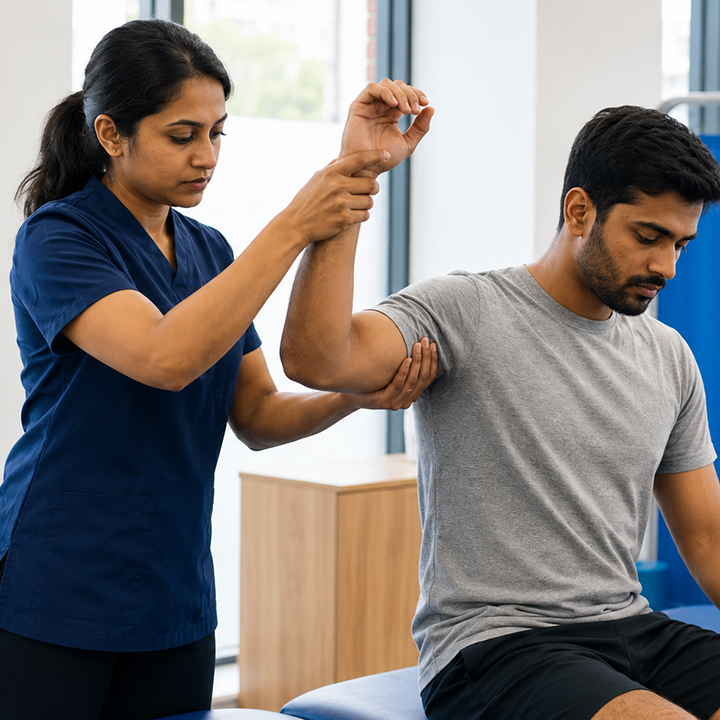
Helping patients remain active, mobile and independent can directly influence treatment tolerance, confidence and overall quality of life.
It is not just about movement. The goal is to ensure that patients remain independent and can move around easily, feeling like themselves during the process because for many patients, this is equally important as any medical results.
Physiotherapy can assist many patients to improve their strength and stamina, reduce cancer-related fatigue, regain flexibility and mobility, reduce pain and stiffness, improve balance and assist with recovery following surgery. For many, this rehabilitation process is a turning point the day they begin to feel more in control of their body than managing symptoms.
But it is important to state explicitly. Not all progress here is dramatic. It can be the ability to go up or down a flight of stairs without stopping or sometimes, falling asleep at night without feeling discomfort. Patients may not be aware of these small changes, yet they may be more important than they realize.
Physiotherapy plays a meaningful role throughout every phase of a patient's cancer treatment and recovery. Patients who are weak following chemotherapy have limited mobility following surgery are tired. It has balance problems or muscle weakness, joint stiffness or nerve problems often benefit from this.
Every programme is based on the individual, what kind of cancer, what stage in the treatment process and what the individual is capable of at the time. The needs of a patient who has just received a diagnosis and is about to start treatment look completely different from those of someone who has been recovering for several months.
Dr Sneha's team first considers every aspect of the patient's cancer treatment type and stage of cancer, current treatment status, physical strength, endurance, mobility, pain and overall functional ability. This is not a one-off thing either as things evolve, this assessment is revisited.
This will then lead to the formation of a plan which will involve any combination of these that make sense, which could be therapeutic exercises, strength conditioning, flexibility, balance, mobility, posture correction and breathing exercises. There are no shortcuts, and the emphasis will always be on making slow progress in a manner that is safe and sustainable not one that sounds good but unrealistic.
The healing process does not necessarily stop after treatment. Numerous patients experience physical symptoms for a long time after their final chemotherapy or radiation treatment such as fatigue, decreased stamina and residual stiffness.
This is precisely where the importance of organized physiotherapy still holds its relevance. This will assist in regaining strength, stamina and ease of resuming back to regular routines while minimizing the impact of the treatment side effects on their everyday living. For many patients, this time may prove to be just as crucial as the therapy period.
Surviving cancer is not only a matter of addressing the illness. Maintaining good physical health is crucial for cancer survivors to become self-assured and independent.
And once a survivor begins feeling independent and strong, their improved sense of self can positively influence other aspects of their life.
At Medicover Cancer Institute, HITEC City, Hyderabad, oncology physiotherapy is seen as an integral part of this greater picture, helping patients to stay active, functional and confident throughout their treatment and recovery process and not just after treatment.
An advanced rehabilitation program is used for cancer patients at Medicover, where Dr Sneha's team helps to counteract any negative impact, decrease pain and promote recovery both during and after treatment.
It may assist either before, during or after treatment. The appropriate time will be recommended by Dr Sneha Oncology Physiotherapy in Hyderabad and the entire team depending on your case.
Yes. A personalized program can help to enhance energy, circulation and sleep patterns, which can help to reduce tiredness.
In most cases, yes. Each program is modified as the patient progresses through treatment and overall health.
Patients who get chemotherapy, radiation, surgery or recovery periods after all those types of treatment.